

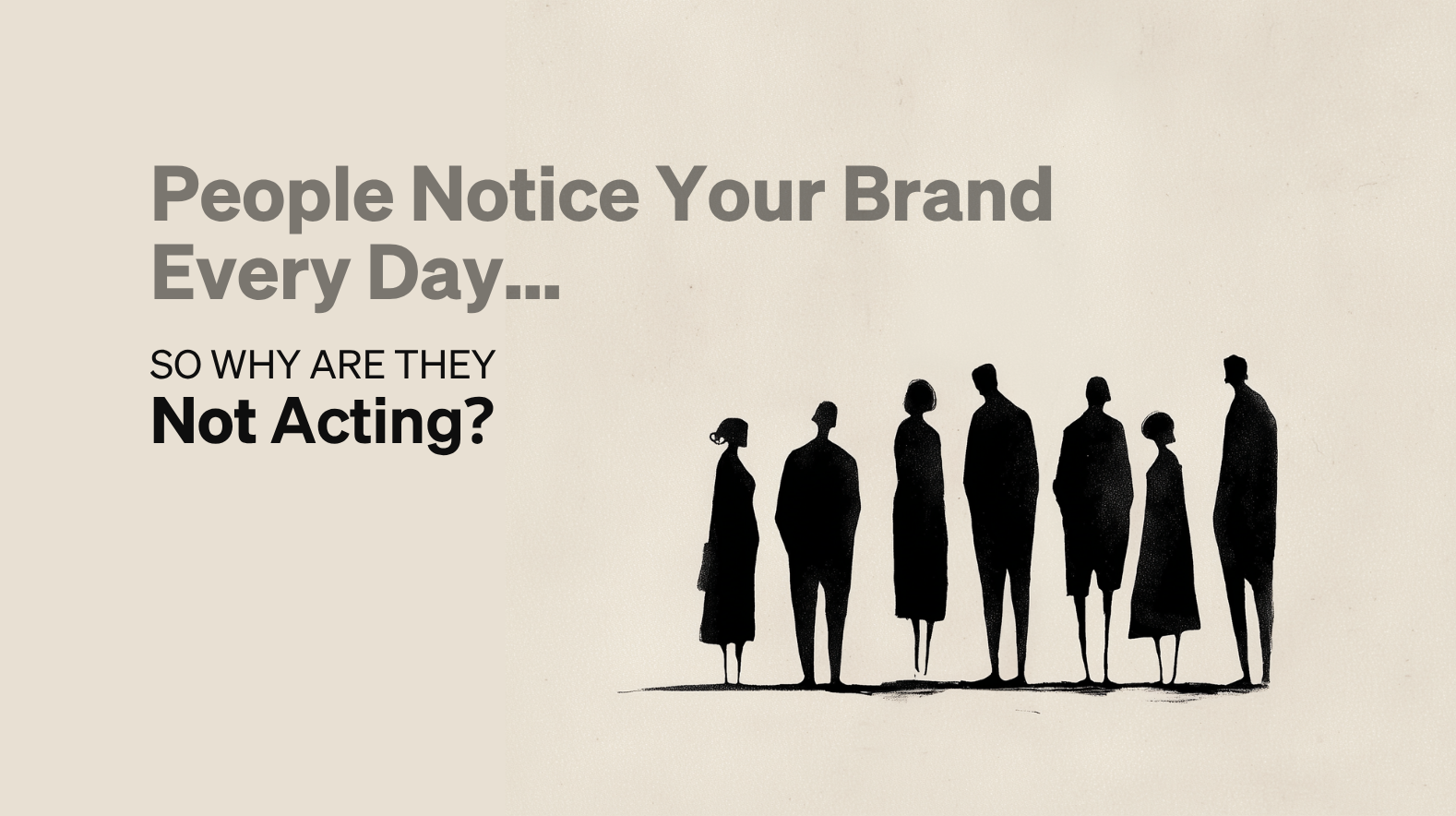
You’re getting impressions. Traffic is coming in. People are spending time on your website. And yet, nothing happens. No meaningful clicks, no inquiries, no conversions that justify the spend.
Most brands assume this is a marketing problem. It isn’t. It’s a design problem.
The Real Problem Isn’t Visibility. It’s Inaction.
Modern brands are not struggling with reach. They’re struggling with response. You can run ads, optimize SEO, push content, and still face the same outcome: passive users. Attention has become easy to buy. Action is much harder to earn.
This gap between visibility and conversion is where most digital strategies break down.
Why Most Design Fails to Drive Action
Most websites are built to look good, not to perform. They follow trends, they satisfy stakeholders, they win design awards. But they don’t influence decisions.
The fundamental issue is simple:
Design without behavioral insight is guesswork.
When design decisions are driven by opinions instead of user behavior:
- Navigation becomes cluttered
- Messaging becomes generic
- CTAs become invisible or ineffective
The result is predictable. Users browse, scroll, and leave.
Users Don’t Think Logically. They Act Behaviorally.
Most businesses assume users evaluate options rationally. They don’t.
Real user behavior is shaped by:
- Cognitive shortcuts
- Emotional triggers
- Trust signals
- Contextual urgency
People don’t carefully analyze your website. They react to it. If your design does not align with how users actually behave, it will never drive action, no matter how polished it looks. Research from organizations like Nielsen Norman Group consistently shows that users scan, skip, and make rapid decisions based on limited cues. That means your design has a very small window to influence behavior.
Introducing BehaviorOS by Leo9 Studio
To bridge the gap between attention and action, we, Leo9 Studio developed BehaviorOS.
BehaviorOS is a behavior-driven design framework built on a simple premise:
Effective design begins with understanding how users think, act, and decide.
Instead of relying on assumptions or purely aesthetic decisions, BehaviorOS focuses on:
- Mapping user intent
- Decoding decision patterns
- Identifying conversion triggers
Discover how BehaviourOS helps brands become the default choice through psychology-driven strategy. Click here to read the full blog!
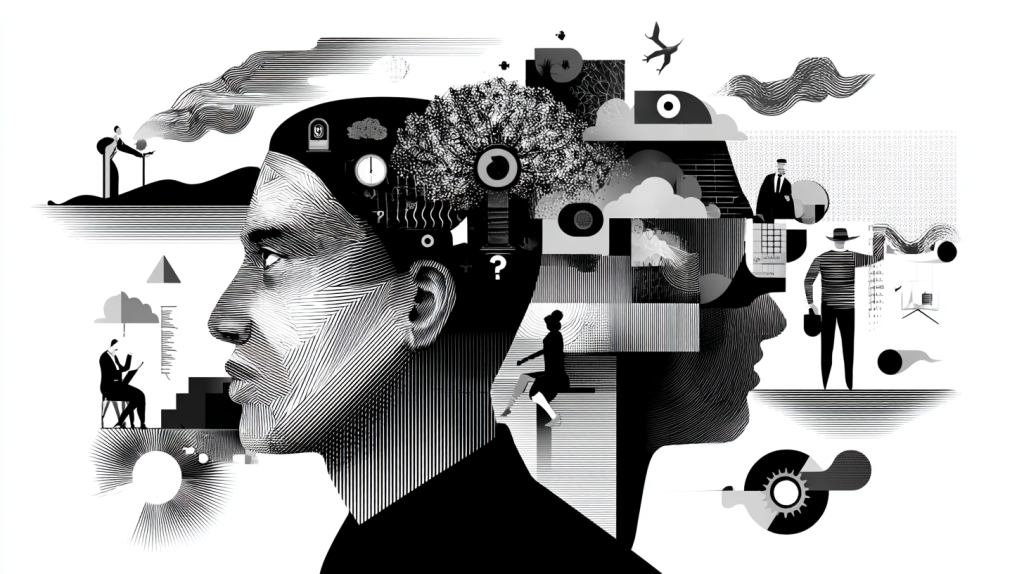
This allows us to create design systems that are not just visually refined, but strategically engineered to drive measurable outcomes. The shift is fundamental. From designing pages to designing decisions. From visual appeal to behavioral performance.
How BehaviorOS Works
Mapping User Intent
Most brands design for what they want users to do. We start with what users actually want.
This involves identifying:
- Entry points
- User motivations
- Context of interaction
When intent is clear, design becomes directional instead of decorative.
Understanding Decision Patterns
Users rarely follow a straight path. They compare, hesitate, get distracted, and return.
BehaviorOS maps these non-linear journeys to understand:
- Where decisions are made
- Where friction occurs
- Where drop-offs happen
This allows us to structure experiences that guide users instead of overwhelming them.
Identifying Conversion Triggers
Action happens when the right trigger meets the right moment.
These triggers can include:
- Social proof
- Urgency
- Clarity of value
- Reduced effort
BehaviorOS identifies and strategically places these triggers to influence outcomes without being intrusive.
From Good Design to High-Performing Design
There is a clear difference between design that looks good and design that performs.
| Traditional Design | Behavior-Driven Design |
| Focus on visuals | Focus on decisions |
| Optimized for scroll | Optimized for action |
| Assumption-led | Data and behavior-led |
| Static experience | Guided journey |
Most brands operate in the first column.
High-performing brands invest in the second.
How to Design for Action
This is where most teams struggle. Execution.
Here is a simplified framework you can apply immediately.
Step 1: Define the Desired Action
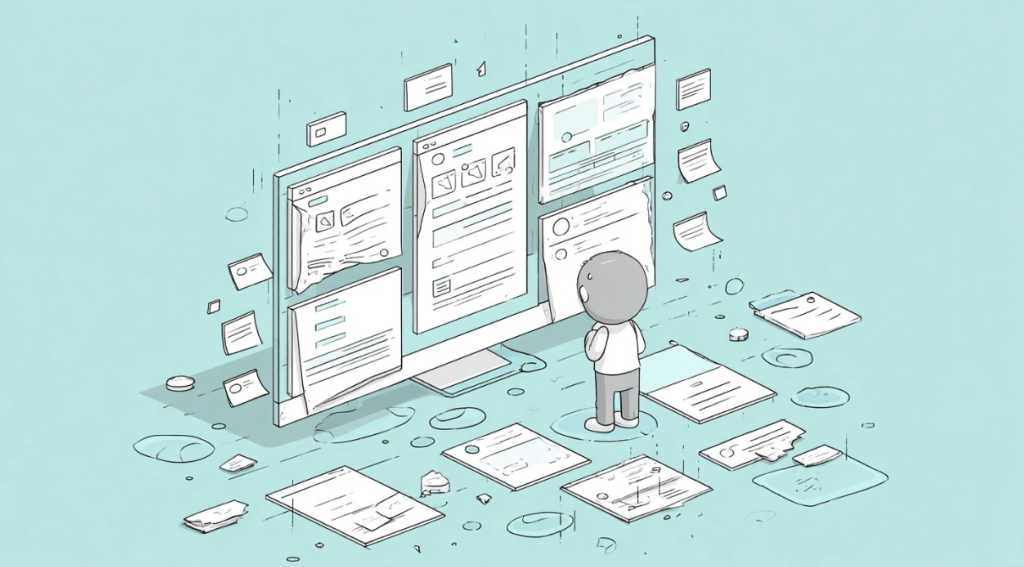
Every page should have one primary objective. Not five. Not three. One.
If the action is unclear, user behavior will be scattered.
Step 2: Remove Decision Friction
Every additional choice increases cognitive load.
Simplify:
- Navigation
- Messaging
- Form fields
The easier it is to decide, the higher the likelihood of action.
Step 3: Use Behavioral Triggers
Integrate elements that nudge decisions:
- Testimonials for trust
- Limited-time cues for urgency
- Clear outcomes for motivation
These are not tactics. They are behavioral levers.
Step 4: Guide, Don’t Overload
Users should not have to figure out what to do next.
Use:
- Visual hierarchy
- Directional cues
- Progressive disclosure
Design should lead, not confuse.
Step 5: Continuously Optimize
Behavior is dynamic. What works today may not work tomorrow.
Measure:
- Click patterns
- Scroll depth
- Drop-offs
Then iterate.
For additional conversion strategies, platforms like HubSpot provide useful benchmarks on user behavior and funnel optimization.
Real Impact: What Happens When You Design for Behavior
When design aligns with behavior, outcomes change.
- Higher conversion rates
- Better quality engagement
- Reduced bounce rates
- Stronger brand trust
More importantly, your brand stops being something users notice and becomes something they respond to.
Why This Matters More in 2026
AI has changed the landscape. Content is abundant. Design is faster. Execution is cheaper.
Which means: Attention is no longer a competitive advantage. Behavior is. The brands that win are not the ones that look better. They are the ones that understand users better.
Final Thought
If your brand is being seen but not acted upon, the issue is not reach. It is design. Not how it looks.
But how it works on the human mind.
The shift is simple, but not easy:
Stop designing for attention.
Start designing for action.
FAQs
Behavior-driven design focuses on understanding how users think and act, and uses that insight to create experiences that drive specific actions rather than just engagement.
Traditional UX often focuses on usability and aesthetics. Behavior-driven design goes deeper into psychology, decision-making patterns, and conversion triggers.
This usually happens when design is optimized for visibility but not for action. Lack of clarity, friction, and weak behavioral triggers are common causes.
Conversion triggers are elements that influence users to take action, such as trust signals, urgency cues, clear value propositions, and simplified decision paths.
Start by simplifying choices, clarifying your primary CTA, and aligning your design with actual user behavior instead of assumptions.
How To: Improve Conversions Using Behavior-Driven Design
- Identify the primary goal of each page
Define the single, primary objective for every page to ensure user behavior is not scattered.
- Analyze user behavior patterns
Map non-linear user journeys to understand where decisions are made, where friction occurs, and where drop-offs happen.
- Reduce unnecessary choices and distractions
Simplify navigation, messaging, and form fields to decrease cognitive load and increase the likelihood of action.
- Add behavioral triggers at key decision points
Integrate elements like testimonials, urgency cues, and clear outcomes to strategically nudge decisions without being intrusive.
- Test and optimize continuously
Measure click patterns, scroll depth, and drop-offs, then continuously iterate, as user behavior is dynamic.
If your current design is not delivering results, it may be time to rethink the approach.
Explore how behavior-driven design with BehaviorOS can transform passive attention into measurable action.