

“The desire to create is one of the deepest yearnings of the human soul.” Dieter Rams
Scroll through any industry today, and you’ll notice a pattern. Brands look polished. Websites are clean. Messaging sounds right. And yet, so much of it feels… interchangeable. Different logos, same energy.
This is exactly why the Creator archetype still matters.
In a world driven by templates, trends, and quick wins, the Creator stands for something quieter and far more powerful: originality with intention. Creator brands don’t rush to fit in. They focus on making something meaningful, something considered, something that feels authored rather than assembled.
Modern audiences are sharper than we give them credit for. They can sense when a brand is copying the playbook versus when it’s building its own. That’s where the Creator archetype cuts through. Not by being louder, but by being truer.
What Is the Creator Archetype in Branding?
At its core, the Creator archetype is driven by one belief: if it can be imagined, it can be made.
In branding, this archetype represents companies that see their brand as an expression of ideas, not just a commercial asset. The Creator doesn’t start with “what’s trending.” It starts with “What do we believe needs to exist?”
Creator brands are obsessed with originality. They value craft, depth, and process. They see making as an act of identity, not execution. This doesn’t mean they ignore strategy or business goals. It means strategy is built around vision, not the other way around.
Importantly, the Creator archetype isn’t about being artsy or experimental for the sake of it. It’s about intention. Every decision has a reason. Every element says something.
Core Traits of the Creator Brand Archetype
Creator brands tend to share a distinct set of characteristics, even when they operate in completely different industries.
They are vision-led, meaning ideas come before validation. They care deeply about originality and actively resist imitation. Craft matters to them, often more than speed. There’s a strong sense of authorship, where the brand feels like it has a clear point of view.
These brands think long-term. They are willing to invest time refining their product, voice, or visual identity because they care about lasting impact. They also carry a quiet confidence. They don’t over-explain or oversell. The work speaks.
At the same time, Creator brands are emotionally invested in what they make. The output isn’t detached. It’s personal. That’s what gives their work depth, but it’s also what requires balance.
The Emotional Promise of a Creator Brand
Every archetype makes an emotional promise. For the Creator, that promise is inspiration.
When people interact with a Creator brand, they should feel a spark. A sense of possibility. A sense that thought was put into this, that it wasn’t rushed or recycled. Creator brands make their audience feel seen, especially those who value depth and originality themselves.
There’s also trust involved. When a brand consistently shows intention and care, people believe in it. Not because it shouts about quality, but because it demonstrates it.
At its best, a Creator brand makes people think, “This was made for a reason. And that reason matters.”
Visual Identity & Brand Expression of the Creator Archetype
Visual identity is where the Creator archetype often becomes most visible, but also most misunderstood. This isn’t about making things look “creative.” It’s about making them feel authored.
Colour palette
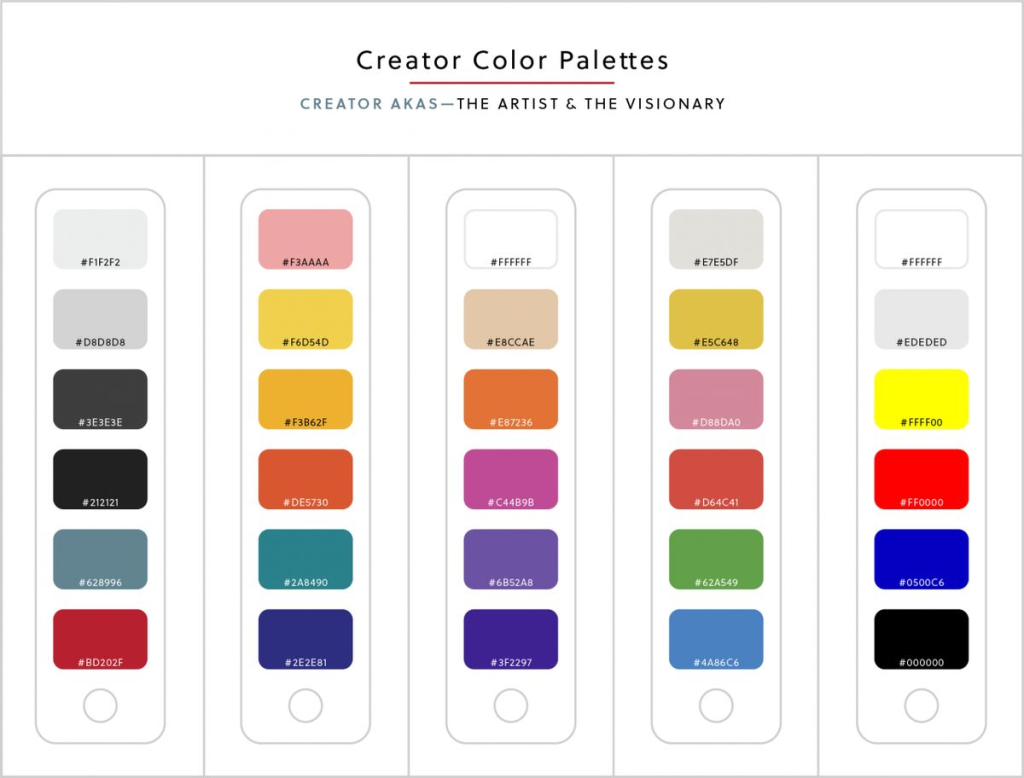
Creator brands choose colours deliberately. Palettes are often restrained or emotionally driven rather than trend-led. Some lean into earthy, muted tones. Others use bold colours with symbolic meaning. The key is intention. Colours support the idea, not the algorithm.
Typography
Typography is rarely generic. Creator brands often use custom typefaces or carefully chosen fonts that carry personality. Editorial styles, handcrafted letterforms, or experimental typography are common, as long as readability isn’t sacrificed.
Imagery
Stock photos are used sparingly, if at all. Imagery tends to be conceptual, abstract, or process-led. Close-up details, textures, behind-the-scenes shots, or idea-driven visuals work well here. The goal is to evoke thought, not just fill space.
Design style
Layouts are flexible but purposeful. Creator brands don’t feel boxed in by rigid grids, yet they aren’t chaotic. There’s breathing room, hierarchy, and rhythm. Nothing feels accidental. Everything feels considered.
Brand Voice & Messaging: How Creator Brands Speak
Creator brands speak like makers, not marketers.
Their voice is reflective, clear, and grounded in ideas. They talk about why things are made the way they are. They explain decisions, share thinking, and invite people into the process. There’s very little hype and very little pressure language.
Messaging is often story-led rather than sales-led. Instead of pushing outcomes, Creator brands talk about intent, philosophy, and exploration. They assume their audience is thoughtful and curious.
This voice doesn’t chase everyone. It resonates deeply with the right people.
Industries Where the Creator Archetype Performs Best
The Creator archetype performs best where making is central to value.
Creative agencies and design studios are natural fits, as creation is literally their product. Fashion and lifestyle brands benefit from the emphasis on expression and originality. Art, publishing, film, and media rely heavily on the Creator’s emotional depth.
Product brands driven by innovation or craftsmanship also align well, especially when the story behind the product matters as much as the product itself. Even education platforms focused on creativity and learning can embody the Creator archetype successfully.
In all these cases, originality isn’t an add-on. It’s the foundation.
Brands That Successfully Use the Creator Archetype
Successful Creator brands don’t just look creative. They operate creatively.
They lead with vision and protect it fiercely. Their visual identity, messaging, and product all tell the same story. There’s consistency, but not sameness. Over time, this creates strong brand recognition and loyalty.
What stands out most is their restraint. They don’t jump on every trend. They don’t dilute their identity to appeal to everyone. Instead, they build slowly, intentionally, and with confidence.
That’s what makes them memorable.
Risks of Using the Creator Archetype Incorrectly
The Creator archetype has its pitfalls.
One common risk is confusing creativity with chaos. Without structure, expression can become scattered. Another is perfectionism. Creator brands can get stuck refining endlessly and delay execution.
There’s also the danger of self-indulgence. When a brand focuses too much on its own expression and not enough on clarity or usability, it alienates its audience. And finally, ignoring commercial realities can hurt even the most beautifully crafted brand.
The Creator archetype works best when imagination is balanced with discipline. Ideas alone are never the differentiator. What matters is the ability to shape them with clarity, intention, and restraint. Because while ideas exist everywhere, true Creator brands are the ones that know how to turn them into something others simply can’t.
Brands That Successfully Use the Creator Archetype
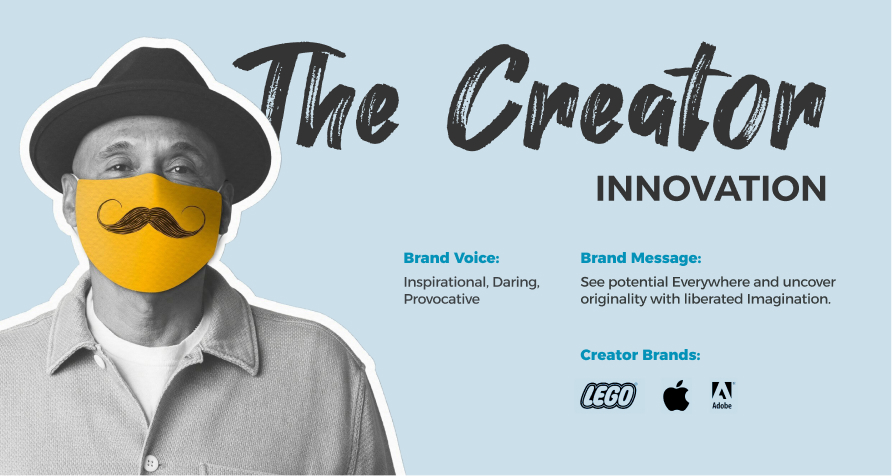
Some of the strongest Creator brands don’t just promote creativity. They build their entire identity around making, experimenting, and expressing ideas with intent. Three brands consistently cited as Creator archetype leaders are LEGO, Apple, and Adobe.
LEGO: Creativity as a Way of Thinking
LEGO’s brand promise goes far beyond toys. It champions imagination, play, and problem-solving at every age. By empowering people to build endlessly without instructions, LEGO positions creation as freedom, not limitation. The brand’s visual language, storytelling, and community-driven platforms all reinforce one idea: creativity belongs to everyone.
Apple: Designed With Vision, Not Noise
Apple represents the Creator archetype through obsessive focus on craft and simplicity. Every product feels intentional, refined, and authored. Apple doesn’t explain creativity loudly. It shows it through design decisions, user experience, and products that enable people to create music, films, apps, and ideas effortlessly.
Adobe: Tools Built for Expression
Adobe’s entire ecosystem exists to support creators. From designers and photographers to filmmakers and marketers, Adobe enables expression at scale. The brand consistently positions itself not as the hero, but as the enabler of creative work. Its messaging focuses on possibility, exploration, and pushing creative boundaries.
What These Brands Have in Common
Despite operating in very different industries, all three brands:
a) Lead with vision before market trends
b) Treat design as a strategic asset
c) Enable creation rather than control it
d) Build emotional loyalty through originality
They don’t try to appeal to everyone. They resonate deeply with people who value making, thinking, and expressing.
How Leo9 Studio Applies the Creator Archetype in Brand Strategy
At Leo9 Studio, the Creator archetype shows up as a way of thinking, not just a style.
Design is treated as a strategic tool, not surface-level decoration. Every brand engagement starts with understanding the idea behind the business. From there, custom frameworks, original design systems, and research-led decisions shape the outcome.
Rather than relying on templates or recycled patterns, Leo9 focuses on building brands that feel authored. Creativity is encouraged, but always grounded in clarity, usability, and business intent.
It’s a balance of imagination and execution, which is exactly where the Creator archetype performs best.
Conclusion: The Creator Brand Archetype Is About Expression, Not Decoration
The biggest misconception about the Creator archetype is that it’s just about looking creative. It isn’t.
At its core, the Creator archetype is about believing that what you make has meaning. That originality is worth protecting. That ideas deserve time, craft, and intention. Creator brands don’t chase relevance. They build it, slowly and thoughtfully.
In a crowded branding landscape, this approach stands out without trying to do so. Not because it’s louder, but because it’s truer. And brands that lead with creation rather than imitation tend to last longer, connect deeper, and age better.
This is where Leo9 Studio comes in. By treating design as a strategic act of creation, not surface-level styling, Leo9 helps brands build identities that feel authored, intentional, and distinctly their own.
If your brand is ready to move beyond templates and start building something original, the Creator archetype isn’t just a fit. It’s a direction.
FAQS:
The Creator archetype is driven by originality and expression rather than power, transformation, or connection. It focuses on making something meaningful, not just selling or persuading.
No. While it naturally fits creative fields, any brand that values innovation, craft, and original thinking can adopt the Creator archetype. What matters is intent, not industry.
Yes. Creator brands succeed when creativity is balanced with strategy and execution. Originality becomes a business advantage when it’s aligned with clear goals and user needs.
The most common mistake is prioritising aesthetics over clarity. When creativity lacks structure or purpose, the brand can feel confusing rather than distinctive.
Leo9 Studio approaches the Creator archetype through strategy-first design, ensuring creativity is rooted in research and intent. This helps brands express originality without losing focus or usability.