


Deciding whether to go with native app development or hybrid app development is a key decision that impacts an application’s performance, user experience, development budget, and scalability. Native apps provide performance specific to the platform and better integration with the device, while hybrid apps offer more versatility in creating applications across several platforms.
The correct option will vary based on the complexity of the product, its performance requirements, budget availability, desired launch date, and long-term goals. The knowledge of the differences existing between native and hybrid help firms understand the pros and cons of both approaches to take the right decisions in terms of the applied technology.
What Is Native App Development?
Native app development refers to the development of applications designed to function on one specific operating system such as iOS or Android, using the specific language, tools, and platforms that support the exact operating system.
For instance, an iOS app can be developed using Swift while in Android development it is common to use Kotlin. Since native apps are created specifically for their intended operating systems, these applications are able to use all the opportunities given by the OS, hardware, and designed specifically for this operating system.
Native app development is favorable for development when it is required to provide some high responsiveness of apps with great animations or if extensive use of the device is needed from the app.
What Is Hybrid App Development?
Hybrid App Development refers to working with web technologies. The combination of HTML, CSS, and JavaScript in conjunction with a standard mobile app wrapper or container makes it possible to create a hybrid application that can run on several platforms at a time. Depending on the hybrid app development framework, it can be applied as web-using webviews, or app code sharing technique.
With the use of the development tools, for example, Ionic with Capacitor, companies can be provided with the opportunity to develop cross-platform apps that function on both iOS and Android while using a great deal of code developed for the application at hand.
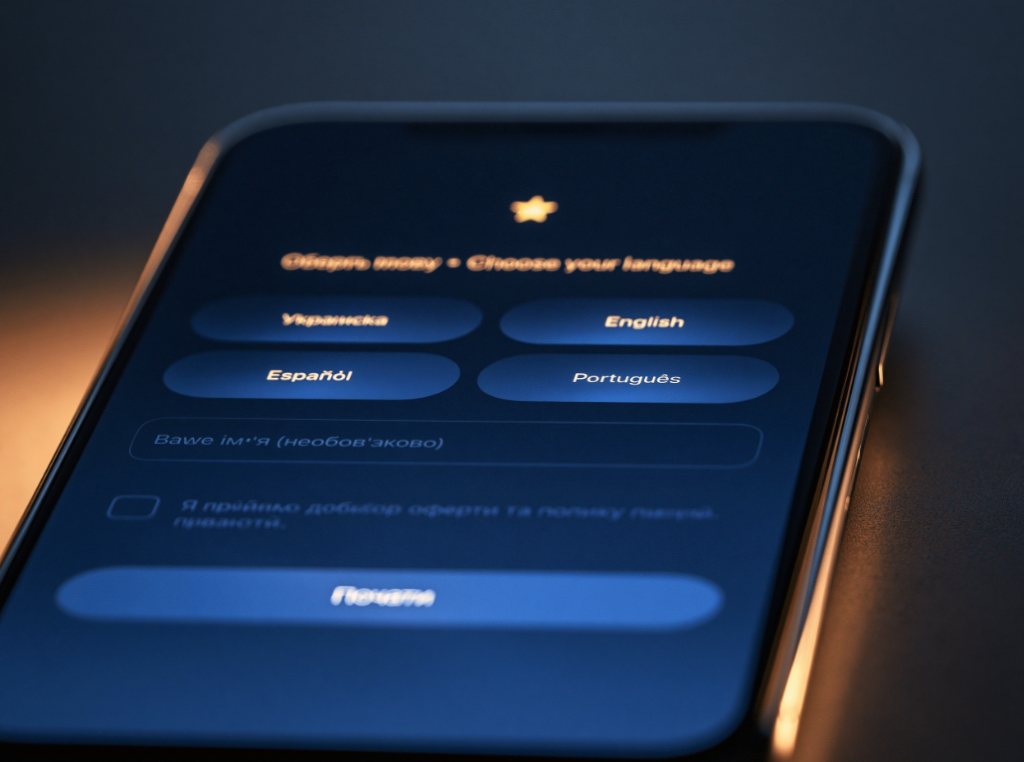
The hybrid app development will allow reducing the amount of duplicated code, simplifying the development of functions and introducing products to the market more efficiently. Nonetheless, it is necessary to point out that hybrid apps’ performance and integration is dependent on framework choice, architecture, and complexity of the app in question.
What Is Hybrid App Development?
| Comparison Factor | Native App Development | Hybrid App Development |
| Performance and Responsiveness | Typically offers the strongest platform-specific optimisation, making it well suited to demanding interactions, graphics, and processing. | Performance depends on the framework and implementation. It works well for many common app experiences but may require extra optimisation for demanding workloads. |
| User Experience and Platform Consistency | Enables interfaces and interactions tailored to iOS and Android conventions. | Shared interfaces can provide consistency across platforms, although platform-specific adjustments may be needed for a natural experience. |
| Development Cost and Time to Market | Often requires separate platform-specific development efforts, increasing initial cost and development time. | Reusing code can reduce development effort and accelerate delivery, depending on product complexity and team expertise. |
Maintenance, Updates and Scalability | Platform-specific maintenance requires coordination, but each version can be optimised independently as the product evolves. | Shared code can simplify common updates, although platform-specific integrations and compatibility still require attention. |
Pros and Cons of Native App Development
Creating native apps is a good idea whenever performance, use of the particular platform’s features, and hardware integration are important for the user experience. However, it’s necessary to weigh the advantages of native apps against the effort needed to develop and maintain numerous versions of the app for each platform.
Pros of Native App Development
- Enhanced performance: Delivers superior management of the process of execution of activities on the different platforms.
- Quality user experience: Connects to the unique design guidelines and technical aspects of the operating system.
- Proper device integration: Uses precise APIs and hardware.
- Possibility of using platform-specific security options: Enables applying security benefits of the operating system and the platform.
- Unity of technical management: Provides an opportunity for teams to improve the application experience across systems.
Cons of Native App Development
- More expensive development costs: Considering the differences between Android and iOS operating systems, the required engineering labor will be higher.
- Greater time for development: The process of development and testing different versions of the app will take longer.
- More complicated process of maintenance: The process of performing updates and improvements requires separate tests for both the versions.
- Increased requirement for human resources: The app development team should be on good terms with different technologies specific to the platforms.
Native development is most valuable when the benefits of platform-specific performance, control, and integration justify the additional investment.
Pros and Cons of Hybrid App Development
Hybrid app creation delivers an efficient way for companies to create applications that can operate on multiple systems, besides allowing the developers to reuse their code. It is especially important if quick launching, effective development, and common functionalities are very important.
Pros of Hybrid App Development
- Quick turnover: Shared codes allow the employees to create and launch features in several systems.
- Possibly lower developing expenses: The fact that developers do not need to repeat the same approaches reduces the chances of wasting time and effort.
- Easy updates: One code is enough to maintain similar business logic.
- Cross-platform solutions: Companies can operate on both iOS and Android with common approaches.
- Applicable to many business areas: Suitable for E-commerce, content-related apps, booking, dashboards, and service-oriented systems.
Cons of Hybrid App Development
- Performance limitations in some instances: Complex animations, heavy graphics, or other heavy use cases can lead to performance issues that require optimization.
- Framework compatibility reliance: When devices change their specs or OS undergoes an update, it may be important to have the suitable plug-ins or perform some repairs.
- Potential UX problems: A universal interface may not always provide well with the needs of various platforms.
- Native integration complications: More complex functionalities may need unique programming for certain platforms, thus canceling out the whole purpose of cross-platform programming.
- Ongoing tech dependencies: Frameworks, plug-ins, and compatibility checks should be carried on.
Hybrid development works best if a reusable code makes it possible to achieve significant efficiency gains without affecting the efficiency of the product in terms of its performance or usability.

When Should You Choose a Native App?
Native application development is indicated when the success of the project is at stakeholder’s high performance, capability development, and actual functioning of operating systems.
Performance-Critical and Feature-Rich Products
Native apps are required when intensive processing of information is needed, complex animation, high-quality graphic rendering, low latency, or highly-developed operations in the background.
Examples include:
- High performing gaming applications
- Applications operating with video, audio, or graphics)
- Real-time applications with tight response time requirements
- Complex finance or enterprise applications with specific integrations with devices.
It should be noted that any decision that needs to be made here should rely more heavily on tangible performance metrics rather than generalisations about an industry. By way of example, a finance dashboard can perform satisfactorily with a hybrid type of architecture contrary to a dedicated real-time trading interface that requires more extensive adjustments of specific platforms.
Long-Term Products Requiring Deep Device Integration
When the project plan has advanced hardware access, huge background processes, or functionalities reliant on specific platform APIs, then native development should be considered.
These include applications that employ Bluetooth devices, high-performance camera features, biometric user verification, or other special integrations with an operating system.
It also allows for optimizing the experience on both iOS and Android separately as user expectations evolve.
When Should You Choose a Hybrid App?
Development of hybrid applications proves to be a viable alternative where the application gains advantages from a unified codebase, quicker initial launch, and effective delivery in multi-platform houses.
MVPs and Products Requiring Faster Launch
A minimum viable product (MVP) refers to a product that is aimed at proving a business idea and checking the functionality of a product in practice using real customers. Hybrid development helps realize an MVP as it enables a team to achieve an early product update without repeating the implementation of core features in each platform.
It can be suitable for:
- Small companies testing their product in the market.
- Booking and service apps.
- Content-focused platforms and consumer portals.
- Add-ons and workflow applications.
A hybrid MVP should still meet efficiency but is worth thinking through in terms of future scaling opportunities. In future, the application may require some special functions, but modifications can be made at later stages automatically.
Shared Functionality Across iOS and Android
Choose hybrid development when the two platforms require largely similar workflows, business logic, and interface components.
For instance, a retail application that includes product cataloging, managing accounts, tracking orders, and providing customer support can take advantage of shared implementation. Now that certain features are developed once, they also can be implemented on both platforms.
This method is particularly helpful if availability of development resources is not sufficient and consistency of functionality between iOS and Android platforms is crucial.
Decision Framework for Choosing the Right Approach
When choosing whether to build a native or hybrid application, it is imperative to analyze the technical requirements of the app so that the right option is chosen and considerations are not based solely on expense or speed of development.
Product Requirements and Technical Complexity
It is essential to start with defining the product-related features. Think about the efficiency goals, equipment correlations, offline operation capabilities, data sensitivity, ease of use, as well as platform-specific needs.
In cases when a product is fully reliant on graphics operations, requires specific hardware utilization, or requires carefully planned interaction techniques, creation of a native application may be the best approach. On the contrary, if the application is focused on forms, content, transactions, or standard workflows, hybrid development will serve as a good solution.
Team Capability, Budget and Timeline
Evaluate the skills already available within your team, the budget allocated to development, and the deadline for launch.
Native development may require separate iOS and Android expertise. Hybrid development lets the team share some of the work with implementation. However, the need for framework expertise as well as native integration expertise still exists.
You should take into account not only the build cost and testing, but also deployment, maintenance, third party integration and future feature development.
Maintenance Plan and Expected Scale
Think of post-launch issues as well. It is vital to determine the frequency of updates, the user numbers the application can cater for, and what sophistication the feature set might need.
Both native and hybrid apps can achieve scalability, provided they have the right technology architecture. The difference is primarily the engineering compromise made, code reuse and amount of platform-specific scalability needed.
Common App Development Approach Mistakes
Choosing the wrong approach to development can result in unnecessary expenses, waiting time, and limitations. Below are common mistakes worth correcting before development.
- Making choices based on price only.
A low initial development price may not lead to low costs of ownership long-term. There are other aspects to think about like maintenance and updates.
- Believing that hybrid apps are not able to support advanced features.
Hybrid applications can support many advanced processes provided the right architecture is chosen and implemented.
- Thinking that native development is always necessary for good quality.
Native development allows controlling applications on the platform as well as possible. Different businesses can achieve good results with the right implementation of hybrid architecture.
- Not taking into account the audience.
Even if one and the same object has all the same functionality, it still needs to be checked whether navigation, access rights, and interactions are appropriate for both iOS and Android.
- Forgetting about maintenance.
Framework compatibility, OS updates, and security updates should be included in the road map from the very beginning.
- Not validating the technologies used.
It is essential to test the architecture and verify its performance capabilities. Testing the most demanding cases will help avoid expenses
FAQs on Native vs Hybrid Apps
No. Native apps generally offer more direct access to platform capabilities and can provide advantages in demanding performance scenarios. However, a well-built hybrid app can be fast and responsive for many everyday use cases. The outcome depends on the framework, architecture, device capabilities, and implementation quality.
Hybrid app development can be more cost-effective because teams can reuse code across iOS and Android. However, the final cost depends on product complexity, native integrations, testing requirements, and maintenance. Applications that need extensive platform-specific customisation may reduce the expected savings.
Yes. Hybrid apps can support authentication, payments, location services, notifications, offline workflows, and many other advanced features. More specialised capabilities may require native plugins or custom platform-specific code. Technical feasibility should be assessed against the product’s requirements.
Hybrid development is often a good choice for an MVP when the goal is to validate an idea quickly across iOS and Android. Native development may be more appropriate when the MVP’s core value depends on advanced performance, hardware integration, or platform-specific capabilities.
Yes. A hybrid application can be rebuilt as a native app if future performance, user experience, or integration requirements justify the investment. However, this is not always necessary. Teams can also extend the existing architecture or replace selected components. A rebuild should be based on technical evidence, business priorities, and the cost of migration.
Conclusion
When choosing between native and hybrid app development, one must look at aligning technology with product aspirations. Native solutions give businesses extensive platform control thus being quite effective in cases where strong performance and solid device integration is required. On the other hand, hybrid development speeds up the process of app delivery while making it possible to minimize effort duplication and make the solution available on iOS and Android simultaneously.
The best choice for a company doesn’t always have to be the most technologically sophisticated option or the one with the lowest initial price. The most successful variant is one that assures the optimal user experience and fulfills all technical requirements while fitting all available resources and being in line with the product’s strategy.