

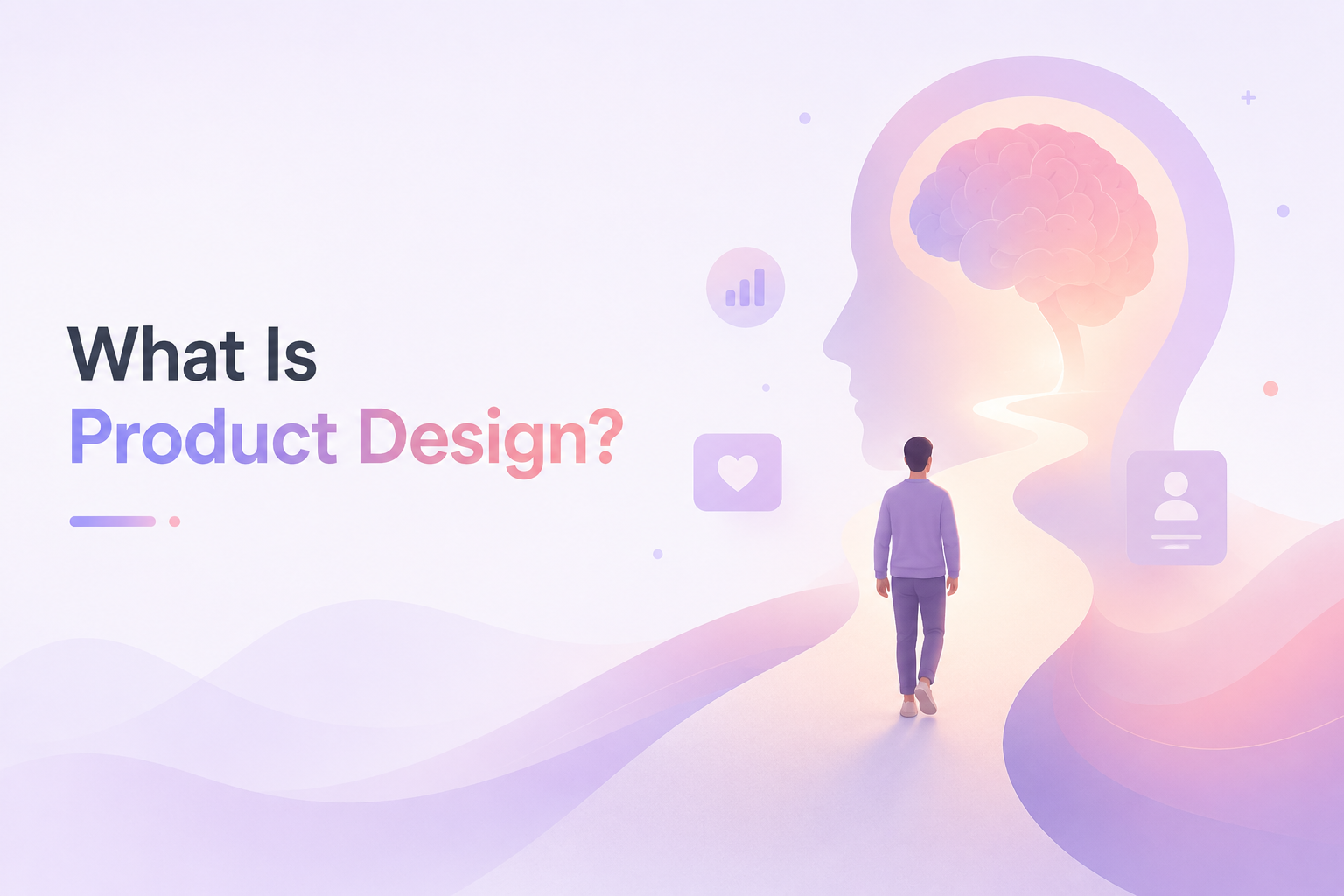
In simple words Product design is all about first imagining, then creating and finally refining products. These products are meant to solve user problems. They also need to meet business goals. The process starts with thinking about what users need. Then it moves to making something that fits those needs while pursuing sustainability and innovation.
Product Design vs UX Design vs UI Design
Often the terms product design, UX design and UI design are used interchangeably. Product Design, UX Design and UI Design each have a different function in the process of product development. While UX design is about how the user experiences the product, and UI design is about how the product looks to the user, product design is about more than just that, it also involves business and technical factors.
Product Design is more than just designing a new product or an improved product. It is a strategic process that integrates creativity, technology, research, and problem-solving to cater to evolving user requirements, foster innovation, functionality, and sustainable value.
UI Design is the development of user interfaces that are intuitive and visually appealing, allowing users to interact with the product smoothly.
UX Design is all about identifying a human behind a product, and designing experiences that help them overcome problems and make their lives easier, happier and more enjoyable when interacting with technology.
How Does Product Design Work?
The technique of product design involves taking into account user requirements, business goals, and technology.
- Setting Goals
Formulate specific business goals and product specifications.
- Learning about Users
Investigate the audience, their habits, requirements, and problems.
- Creating Solutions
Work out user flows, wireframes, prototypes, and designs.
- Launching the Product
Collaborate with development teams to put the completed design into practice.
- Making Changes and Updates
Track the performance of the product and make improvements based on users feedback.
Key Product Design Principles
- User-Centricity
Thinking from the end users perspective and keeping their pain points, actual needs in mind.
- Simplicity
To remove the unnecessary clutter and make the interface easy and user friendly, so that the users are less confused.
- Functionality
The functionality should be seamless and all features should serve a purpose.
- Consistency
There should be a consistency in layout, font, font size, colors and elements across the product.
- Accessibility
To make sure the product is accessible to everyone, including the people with different abilities. This would help in creating a strong relationship between the product and consumers.
- Innovation
To explore better ideas and latest technology, so that it is easily adapted by consumers.
- Scalability
To develop designs that are more scalable and acceptable to a growing product.
How to Follow the Product Design Process?
- Define Business and Product Goals
To develop clear business goals and understand the purpose of the product for the business and its users.
- Conduct User Research
To discover the audience, their problems, their needs and the marketing trends.
- Identify User Needs and Opportunities
Evaluate and interpret research findings to recognise user needs, problems and opportunity for innovative solutions.
- Create User Flows and Wireframes
Outline interactions between users and the product, and develop wireframes to consider the structure, navigation, and functionality.
- Develop Prototypes
Convert wireframes into interactive prototypes and create a realistic view of how the product will function.
- Test and Validate the Design
Test prototype with users and collect feedback
- Launch and Improve
Release the product, track its performance, gather feedback from users, and continue doing necessary improvements.
Understand the UI UX design process from research to launch. See how strategy, user flows, wireframes, UI design, testing and iteration connect.
Common Product Design Challenges
- Knowing the user needs
When user needs differ and expectations are also diverse, this can be a difficult task to accomplish
- Scope and Complexity
The addition of too many features can complicate a product and make it hard to use.
- Design for consistency
It is important to design it to be consistent across screens, platforms and devices.
- Collecting Useful Feedback
It can be tricky to get feedback from the right people, as some people are very reluctant to cooperate.
Benefits of Product Design for Businesses
- Improves Customer Satisfaction
This helps in creating products that are easy to use and user friendly.
- Builds Brand Loyalty
Building positive product experience and improving customer satisfaction leads to repeat customers.
- Supports Innovation
A structured design process helps businesses discover new ideas and opportunities.
- Boosts User Engagement
Intuitive experiences encourage users to interact with the product more frequently.
How to Choose a Product Design Approach for Your Business
Understand Your Business Goals
Clarify the goals of the product, whether you want to boost its popularity, enhance your clientele’s experience, or conquer a new market.
Identify Your Target Audience
Conduct user research to learn about customer requirements, habits, and problems.
Think about User Experience
Choose a method that will help create user-friendly, easy-to-access, and valuable goods.
Frequently Asked Questions about Product Design
Product design is the process of creating a product that solves users’ problems while being functional, easy to use, and visually appealing.
Product design is closely related to the IT and technology industry, but it is not limited to IT. Product designers can work on digital products like apps and websites as well as physical products.
Not exactly. UX design focuses mainly on the user’s experience, while product design covers the broader product from user experience and functionality to business goals and overall design.
A product designer’s salary varies based on experience, skills, location, and company. In India, entry-level designers generally earn less, while experienced product designers can earn significantly higher salaries.
Product design is the process of creating useful, functional, and user-friendly products that solve real problems.
UX design focuses on the user’s experience, while product design considers the overall product, including user needs, business goals, functionality, and design.
A product designer researches users, defines problems, creates design solutions, prototypes ideas, and tests products to improve the overall experience.
The main stages include research, problem definition, ideation, wireframing, prototyping, testing, and continuous improvement.
Product design timelines vary depending on the product’s complexity, scope, research requirements, and project goals.
Effective product design improves customer satisfaction, increases engagement, strengthens brand loyalty, and creates opportunities for business growth.
Reference:
https://medium.com/design-bootcamp/product-design-vs-ux-design-vs-ui-design-2b281ba5f6c7