

“In a world of predictable brands, the ones that win are the ones that help people break routine.”
Most brands today feel predictable. Same templates, same tone, same safe positioning. They focus on fitting in, not moving people forward. But people have changed.
Audiences today aren’t just buying products. They’re looking for experiences that feel meaningful. They want growth, change, and a sense of direction. Not everything has to be dramatic, but it has to feel like progress. That’s exactly where the Explorer archetype stands out.
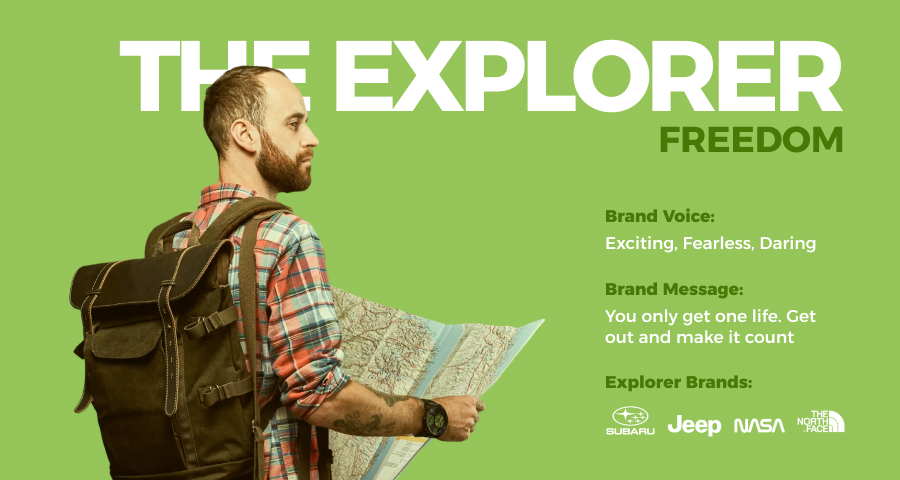
Explorer brands don’t just sell something useful. They sell movement. The idea of stepping out, trying something new, and becoming a slightly different version of yourself in the process.
This is why the archetype still works so well in modern branding. It taps into a very real tension people feel every day. The pull between staying comfortable and wanting something more.
The brands that win here are the ones that don’t just promise quality or convenience. They invite people to break routine, explore new possibilities, and see what’s beyond the familiar.
What Is the Explorer Archetype in Branding?
At its core, the Explorer archetype is about freedom through discovery.
In branding, this means helping people move beyond the familiar. It’s not just about adventure or travel. It’s about encouraging change, curiosity, and personal growth.
Explorer brands push people to step out of routine, try something new, and figure things out on their own. You might hear it framed as the adventurer, the seeker, or the pioneer, but the idea stays the same: a constant drive to explore and evolve.
What sets this archetype apart is its internal drive. It doesn’t follow trends or wait for validation. It sets its own path and invites others to do the same.
And importantly, it’s not limited to outdoor or travel brands. Any brand that helps people discover something new about the world, or themselves,s can tap into the Explorer archetype.
Because in the end, it’s not about where you go. It’s about what changes when you do.
Core Traits of the Explorer Brand Archetype
Independence
Explorer brands value freedom above everything. They don’t follow the crowd or rely on approval. They create their own path and encourage their audience to do the same.
Curiosity
There’s a constant need to learn, explore, and understand more. These brands are driven by questions, not just answers, and they invite their audience into that mindset.
Risk-taking
Growth doesn’t come from staying safe. Explorer brands are willing to push boundaries and take calculated risks to discover something new.
Authenticity
They don’t try to fit into trends or expectations. What you see is real, honest, and aligned with their core belief in individuality.
Resilience
Exploration comes with uncertainty. These brands embrace challenges and keep moving forward, showing that progress matters more than perfection.
Restlessness
Standing still isn’t an option. Explorer brands are always evolving, always searching, and always looking for what’s next.
Visual Identity & Brand Expression of the Explorer Archetype
Colour Palette
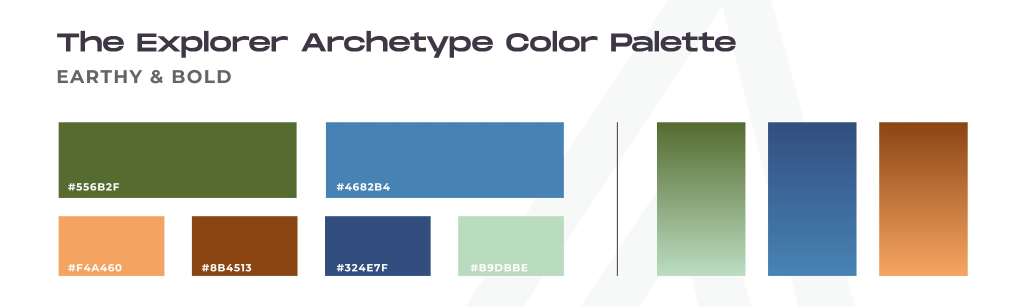
Explorer brands lean heavily on nature-inspired tones. Think deep greens, earthy browns, ocean blues, and muted neutrals. These colours ground the brand in reality and connect it to the outdoors and the unknown.
To balance this, some brands add bold accent colours like red or orange to bring in energy and movement. The overall feel should suggest freedom, depth, and a sense of journey.
Typography
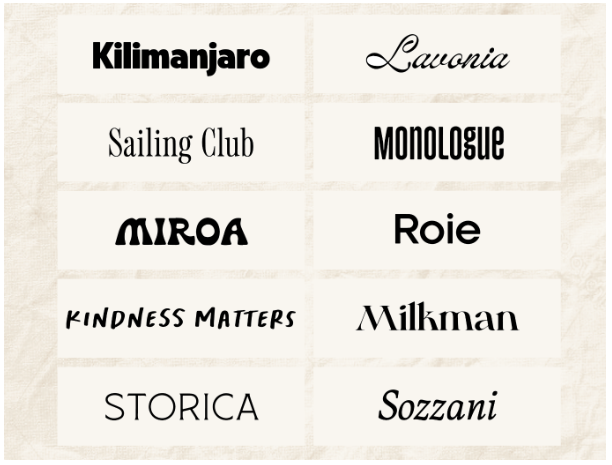
Typography is usually clean, strong, and functional. Sans-serif fonts work well, often with a slightly rugged or bold feel.
The goal isn’t decoration. It’s clarity and confidence. The type should feel reliable, easy to read, and strong enough to stand on its own across different environments.
Design Style
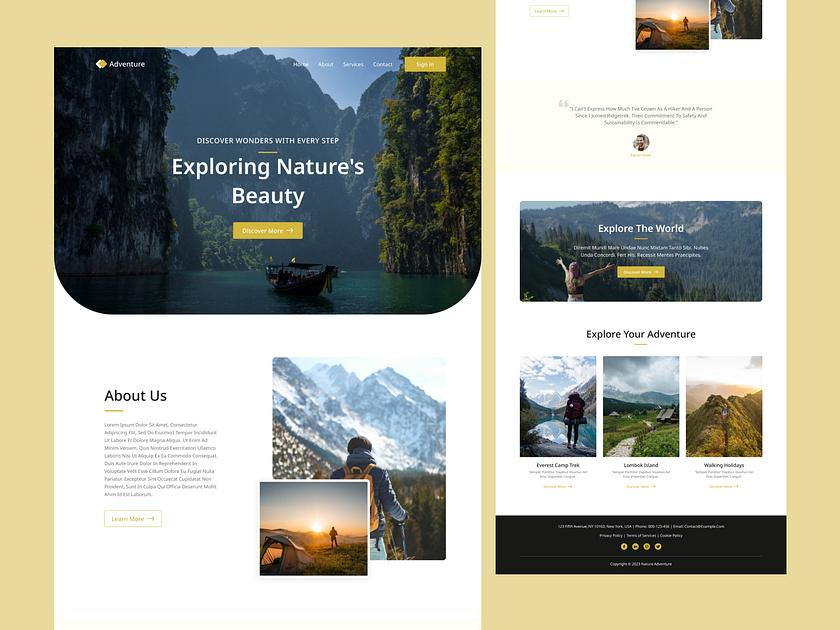
The overall design style is minimal but bold.
Layouts often use strong imagery, clean spacing, and clear hierarchy. There’s a sense of openness and movement, rather than clutter.
Everything works together to create one feeling: there’s more out there, and you should go find it.
Imagery
Imagery plays a huge role. Explorer brands focus on real, unfiltered moments.
You’ll often see:
– Vast Landscapes (mountains, seas and forests)
– People in motion, mid-journey
– Candid, less staged photography
It’s not about perfection. It’s about experience and authenticity.
Industries Where the Explorer Archetype Performs Best
Automotive (Adventure & Off-Road)
Automotive brands tap into the Explorer archetype by selling freedom of movement. It’s not just about getting from point A to B, but where you can go when limits don’t exist.
Example: Jeep
Jeep, for instance, positions itself around off-road capability and rugged terrain. The brand doesn’t just sell vehicles. It sells the idea of going places others can’t. That’s pure Explorer energy.
Outdoor & Sportswear
This category naturally fits the archetype because it enables physical exploration and endurance.
Example: The North Face
The North Face builds its identity around pushing limits in extreme environments. The messaging is clear: you’re not just wearing gear, you’re stepping into challenge and discovery.
Energy Drinks & Performance Brands
Here, the Explorer shows up as energy for experience.
Example: Red Bull
Red Bull doesn’t focus on the drink itself. It focuses on what the drink enables. Extreme sports, risk-taking, and pushing human limits. It’s less about consumption and more about action.
Travel & Tourism
Travel brands embody the most literal form of exploration: new places and new cultures.
Example: Airbnb
Airbnb goes beyond accommodation. It positions travel as a way to live differently, even if temporarily. The focus is on unique, local, and personal experiences, not just destinations.
Media, Education & Discovery Platforms
In this space, exploration becomes intellectual and cultural.
Example: National Geographic
National Geographic invites people to explore the world through stories, science, and visuals. It satisfies curiosity and expands perspective, making discovery accessible without physically travelling.
Across all these industries, the pattern stays the same.
Explorer brands don’t just offer utility; they offer access to something beyond the ordinary.
How Brands Can Strategically Adopt the Explorer Archetype
Adopting the Explorer archetype isn’t about changing how your brand looks. It’s about changing what your brand stands for and enables.
- Start with the audience mindset
Explorer brands work best for people who value freedom, growth, and new experiences. Before anything else, understand if your audience is driven by curiosity or stuck in routine and looking for change.
- Define a clear promise around movement
Your brand should stand for more than a product. It should represent a shift. Whether it’s learning something new, going somewhere new, or thinking differently, the promise should always tie back to progress and discovery.
- Build storytelling, not just campaigns
Explorer brands don’t rely on one-off messaging. They build narratives around journeys, challenges, and transformation. The focus should be on what people experience, not just what they buy.
- Balance exploration with reliability
You can’t just sell excitement. The product or service needs to deliver consistently. The strongest Explorer brands combine adventure in positioning with trust in execution.
- Stay consistent while evolving
Exploration naturally leads to change. But the core idea should remain stable. Your tone, message, and purpose should feel connected, even as the brand grows and experiments.
- Make it real, not performative
Audiences can tell when exploration is just a theme. It needs to show up in your product, your culture, and your communication. If the brand doesn’t actually enable discovery, the positioning won’t hold.
In the end, it’s not about looking like an Explorer brand. It’s about giving people a real reason to move forward.
How Leo9 Studio Applies the Explorer Archetype in Brand Strategy
At Leo9 Studio, the Explorer archetype is used as a strategic lens, not just a visual direction.
The process begins by identifying how a brand can enable movement, discovery, or new perspectives for its audience. From there, the archetype is translated into positioning, messaging, and design systems that consistently reflect growth and exploration.
A strong example of this is Travelxp.
Leo9 helped shape Travelxp into a brand that goes beyond showcasing destinations. The focus shifted to immersive discovery. From content storytelling to visual identity, everything was designed to make the audience feel like they’re part of the journey, not just watching it.
– Positioning: Travel as experience, not just location
– Content: Real, diverse, and culturally rich exploration
– Visuals: Expansive, on-ground, and movement-driven
This approach made the brand feel less like a channel and more like a gateway to the world.
That’s how the Explorer archetype works when applied right. It doesn’t just look adventurous. It makes the audience want to explore.
Conclusion: The Explorer Archetype Is About Growth, Not Just Adventure
The Explorer archetype is often misunderstood as just adventure, travel, or thrill. But at its core, it’s about something deeper. It’s about growth.
The need to move forward. To step out of routine. To discover something new, whether that’s a place, an idea, or a version of yourself.
That’s why it continues to work in modern branding. Because it connects with a real human instinct. The desire not to stay the same.
The brands that get this right don’t just look adventurous.
They create experiences that push people to think differently, act differently, and evolve.
If your brand is built around change, curiosity, or new possibilities, the Explorer archetype can be a powerful direction. But only when it’s applied with clarity and intent. That’s where the right strategy matters.
At Leo9 Studio, we help brands move beyond surface-level positioning and build identities that actually mean something to their audience. Whether it’s redefining your voice, refining your visual system, or shaping a stronger narrative, the goal is simple: create a brand that people don’t just notice, but want to be part of.
If you’re looking to build a brand that inspires movement, not just attention, it might be time to explore what’s possible.
FAQs-
The Explorer is driven by self-discovery and growth through new experiences. It’s not just about going somewhere new, but about becoming something new in the process.
The tone is bold, encouraging, and action-oriented. It pushes people to step out of their comfort zone, explore possibilities, and move forward rather than stay safe.
The Explorer focuses on personal freedom and discovery, while the Hero focuses on achievement and proving strength.
Explorer says, “Find your own path.”
Hero says, “win and overcome.”
The biggest fear is being stuck. Living a repetitive, controlled, or unfulfilled life with no growth or change.
“You only get one life, make it count.”