


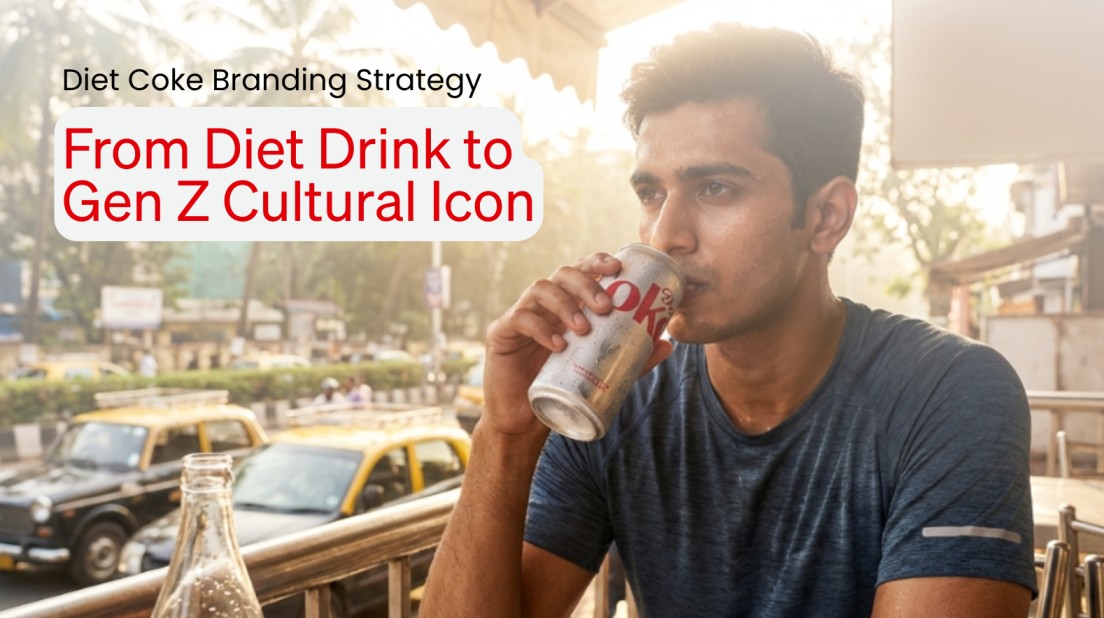
The Diet Coke branding strategy is a strong example of how a brand can evolve with culture without losing its identity. Launched in 1982 by The Coca-Cola Company, Diet Coke entered the market as a low-calorie alternative, but it didn’t stay just that for long.
From the start, the brand made a clear choice:
not to sell “dieting,” but to sell a lifestyle.
This decision helped Diet Coke move beyond function and build a distinct identity rooted in taste, sophistication, and everyday moments.
Over time, the journey wasn’t linear.
– It rose to cultural prominence through strong advertising and positioning
– It lost relevance as consumer preferences shifted toward wellness
And then, unexpectedly, it found its way back—this time through Gen Z and internet culture
Today, Diet Coke is more than a beverage. It represents a pause, a ritual, and a subtle form of self-expression.
So how did this transformation happen?
This case study breaks down the Diet Coke branding strategy across phases from its launch to its Gen Z resurgence and what brands can learn from it.
Problem: Losing Relevance in a Changing World
The Diet Coke branding strategy began to lose momentum in the early 2010s, not because the product changed, but because the consumer did.
So, what shifted?
– The word “diet” started to feel restrictive and outdated
– Rising health awareness made people question artificial sweeteners
– Millennials and Gen Z began choosing natural, functional, and “clean” beverages
– The entire soda category saw a steady decline
This wasn’t just a category problem. It was a perception problem.
Diet Coke, once seen as modern and aspirational, slowly started to feel like a leftover from a different era.
And that raised a bigger question:
Why should a younger consumer pick Diet Coke today?
Where the Strategy Slipped
In trying to fix this, the Coca-Cola Company introduced the “One Brand” strategy.
The idea was simple: unify all Coca-Cola products under one identity.
But for Diet Coke, this created a disconnect.
– Its distinct personality got diluted
– Messaging became broad and non-specific
– The brand lost what made it stand out in the first place
What was once sharp and culturally relevant started to feel generic and interchangeable.
The Real Problem
The Diet Coke branding strategy wasn’t failing because of taste or distribution.
It was failing because it had no clear role in a changing cultural landscape.
For Gen Z especially:
– It didn’t feel relatable
– It didn’t feel current
– And most importantly, it didn’t feel necessary
That’s when the brand hit a critical point, not decline, but irrelevance.
Branding Strategy That Clicked with Gen Z
The comeback of the Diet Coke branding strategy didn’t come from a single campaign. It came from a shift in how the brand showed up and, more importantly, how people started using it.
Instead of pushing a new identity, Diet Coke allowed a new meaning to emerge organically.
So, what changed?
1. From “Diet” to “Moment”
The biggest shift in the Diet Coke branding strategy was moving away from function.
It stopped trying to justify itself as a low-calorie drink and started fitting into everyday moments.
– Not about health
– Not about guilt
– Just about a quick, satisfying pause
This made the brand feel effortless, something Gen Z naturally connects with.
2. The Rise of “Fridge Cigarette”
Then came the internet.
A viral TikTok moment reframed Diet Coke as a “fridge cigarette.”
Strange? Yes.
Effective? Completely.
The idea was simple:
– Opening a cold Diet Coke = taking a smoke break
– A small escape in the middle of the day
– A pause that feels slightly indulgent, but harmless
For Gen Z, this clicked instantly.
It wasn’t about the drink itself.
It was about the ritual and the feeling attached to it.
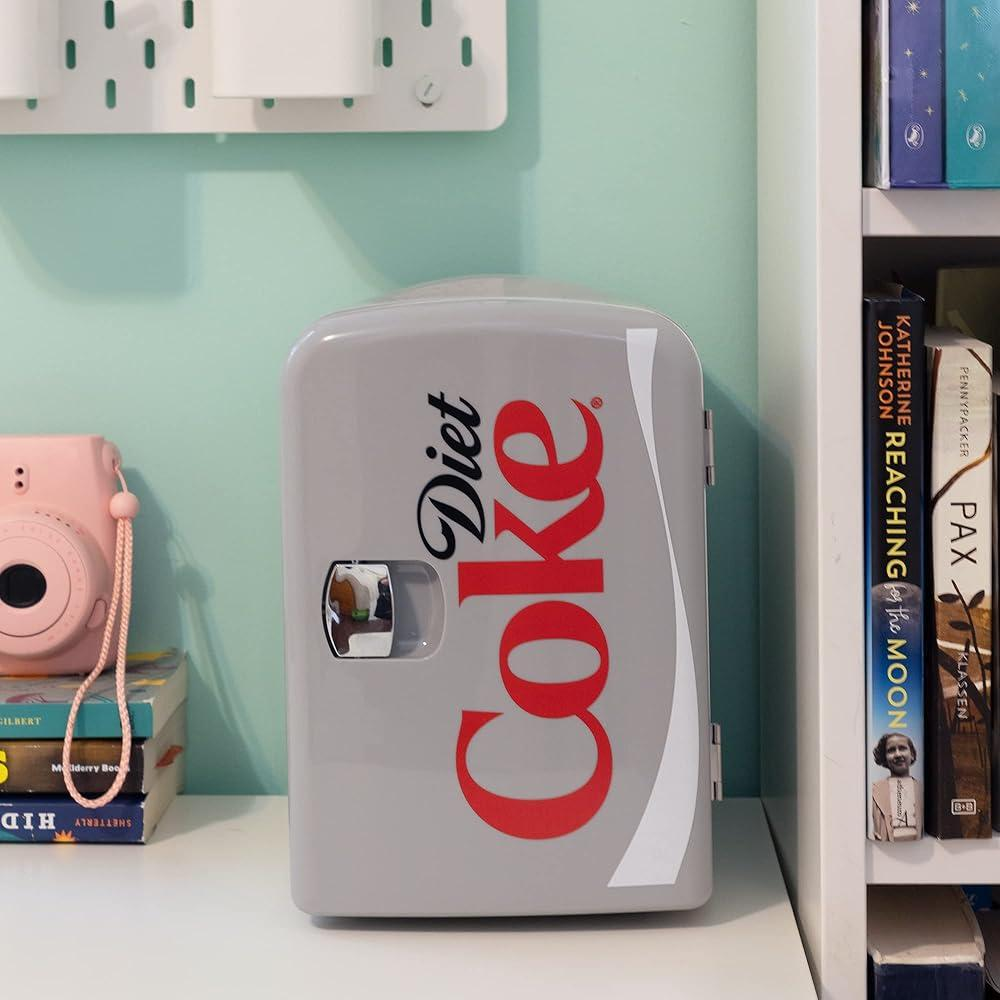
3. The “Crispy Diet Coke” Obsession
Alongside this, another trend picked up “crispy Diet Coke.”
This wasn’t just about taste. It was about experience:
– Ice-cold can
– That sharp crack when opening
– Fizzy, chilled first sip
– Often paired with pebble ice or a lemon wedge
– Gen Z turned this into a sensory ritual.
The more specific the experience, the more shareable it became.
And suddenly, Diet Coke wasn’t just consumed, it was performed and documented.

4. Why These Trends Worked
The success of these trends tells you everything about the Diet Coke branding strategy today.
– It fits into low-effort self-care
– It aligns with anti-perfection, anti-wellness culture
– It creates a repeatable, personal ritual
It feels real, not marketed
Most importantly, the brand didn’t try to own or control these trends.
It simply let them grow.
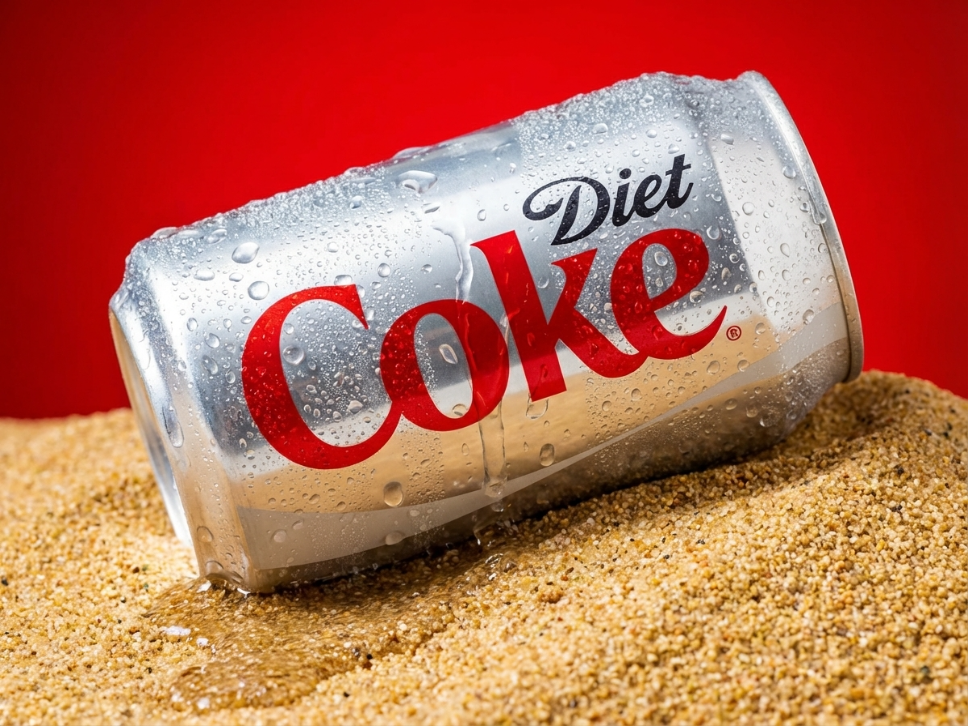
5. From Product to Cultural Signal
This is where the shift becomes clear.
Diet Coke is no longer just a beverage choice.
It’s a signal.
– “I need a break”
– “I’m not overthinking this”
– “This is my small moment”
The Diet Coke branding strategy worked because it stopped trying to define the brand and allowed consumers to define it instead.
And that’s exactly what made it relevant again.
How Leo9’s BehaviourOS Connects to the Diet Coke Branding Strategy
What makes the Diet Coke branding strategy even more interesting is how closely it aligns with Leo9’s BehaviourOS thinking—even without being explicitly designed that way.
At its core, BehaviourOS looks at brands as systems built on three things:
triggers, rituals, and meaning.
And Diet Coke fits this almost perfectly.
1. Trigger: Why People Reach for It
For Gen Z, the trigger isn’t “I want a diet drink.”
It’s:
“I need a quick break”
“I want something refreshing without thinking too much”
The Diet Coke branding strategy shifted from functional triggers (low calories) to emotional triggers (pause, reset, escape).
2. Ritual: How It’s Consumed
This is where the brand becomes powerful.
Opening a can, hearing the crack, pouring it over ice, adding lemon,
these aren’t random actions anymore.
They’re rituals.
Trends like “fridge cigarette” and “crispy Diet Coke” didn’t just go viral because of humour.
They worked because they standardised a behaviour people could repeat and share.
3. Meaning: What It Represents
Today, Diet Coke stands for more than the product itself.
– A small act of self-care
– A break from constant productivity
– A subtle rejection of over-optimised lifestyles
This layer of meaning is what makes the Diet Coke branding strategy culturally relevant again.
Why This Matters?
Leo9’s BehaviourOS framework helps explain why this comeback worked.
Diet Coke didn’t just change its messaging.
It aligned itself with how people naturally behave, feel, and express themselves.
That’s the difference between a brand people notice and a brand people live with.
What Brands Can Learn from This Strategy?
The Diet Coke branding strategy shows that relevance today isn’t built through louder marketing; it’s built through better alignment with behaviour.
So what should brands actually take from this?
1. Stop Selling the Product, Start Owning the Moment
Consumers don’t think in categories. They think in situations.
Diet Coke didn’t win Gen Z by being a better “diet soda.”
It won by becoming part of a daily pause.
Ask yourself:
Where does your product fit in someone’s day, not just their need?
2. Design for Ritual, Not Just Usage
The strongest brands are repeatable.
From the “crack” of the can to the idea of a “crispy Diet Coke,” the experience became something people could recreate and share.
Small details matter.
They turn consumption into a habit.
3. Let Culture Shape the Brand
Not every narrative needs to come from the brand.
The “fridge cigarette” trend worked because it felt unfiltered and real.
The brand’s role was to observe, validate, and support—not control.
If people are already talking about your product,
That’s your starting point.
4. Be Specific, Not Generic
The biggest mistake in the Diet Coke branding strategy was trying to appeal to everyone.
The comeback happened when it focused on a clear audience mindset.
Relevance comes from clarity, not scale.
5. Build Meaning Over Time
You can’t force cultural relevance overnight.
Diet Coke’s Gen Z moment worked because it built on years of positioning around breaks, lifestyle, and identity.
What feels “sudden” is usually years in the making.
In the end, the takeaway is simple:
Brands don’t become relevant by changing what they sell.
They become relevant by changing what they mean in people’s lives.
Conclusion for Diet Coke Branding Strategy
The Diet Coke branding strategy is a clear reminder that brands don’t stay relevant by staying the same—they stay relevant by evolving with culture while holding onto their core.
From a functional “diet drink” to a Gen Z cultural signal, Diet Coke didn’t reinvent its product.
It redefined its place in people’s lives.
It moved from:
A need → to a habit
A habit → to a ritual
A ritual → to a meaning
And that’s what made the difference.
At Leo9 Studio, this is exactly how brand strategy is approached. Not just as positioning or communication, but as a behaviour system. Using BehaviourOS framework, Leo9 helps brands:
– Identify real consumer triggers
– Design repeatable rituals
– Build meaning that lasts beyond campaigns
Because in today’s market, the strongest brands aren’t the ones people notice
They’re the ones people naturally build into their everyday lives.If you’re looking to move your brand from product to cultural relevance, that’s where the real work begins.
FAQs for Diet Coke Branding Strategy
The Diet Coke branding strategy focuses on lifestyle over functionality. Instead of promoting it as a “diet drink,” the brand positions itself around moments, rituals, and self-expression, making it relevant across different generations.
a) Product: Wide range of beverages including Diet Coke, Coke Zero, and more
b) Price: Competitive pricing with global adaptability
c) Place: Strong global distribution across retail, online, and vending
d) Promotion: Heavy investment in advertising, storytelling, and cultural campaigns
The Diet Coke branding strategy lost impact as “diet” became outdated and consumers shifted toward healthier, more natural drinks. It also lost its distinct identity during the “One Brand” phase, making it less appealing to younger audiences.
The Diet Coke branding strategy connected with Gen Z through organic trends like “fridge cigarette” and “crispy Diet Coke.” These trends turned the product into a relatable ritual, helping it gain cultural relevance without forced advertising.