

When Growth Stalls, Look Closer at the Experience
You’ve built something remarkable. Your product solves real problems. Your team is passionate. Your business model is sound. Yet somehow, growth isn’t happening the way you envisioned.
If this resonates with you, you’re not alone. Across industries, from ambitious startups to established enterprises, brands are hitting invisible walls. Marketing campaigns drive traffic, but conversions remain flat. User acquisition costs climb while retention rates drop. Features are added, but engagement doesn’t follow.
Here’s what most leaders miss: the problem isn’t your business model, your market, or your team. It’s how your digital experience makes people feel.
In 2026, we’re witnessing a fundamental shift in how brands scale. The companies capturing market share aren’t necessarily the ones with the biggest budgets or the most aggressive expansion strategies. They’re the ones that have mastered something deceptively simple yet profoundly complex, creating digital experiences that feel intuitive today and adapt seamlessly tomorrow.
This is the essence of future ready UX design. It’s not a buzzword or a fleeting trend. It’s a strategic approach to building digital products that grow alongside your users, your technology, and your business ambitions without losing the human-centered clarity that made them valuable in the first place.
At Leo9 Studio, we’ve walked alongside brands at this critical crossroads. We’ve seen fintech platforms transform from confusing interfaces into trusted financial companions. We’ve watched enterprise software evolve from static tools into dynamic ecosystems. We’ve helped educational platforms scale from local solutions to global communities. In every case, the turning point came when leaders recognized that their user experience wasn’t just a design concern, it was the foundation of their entire growth strategy.
This guide is for every founder, product leader, and brand strategist who senses that their digital experience could be working harder for their business. We’ll explore what future ready UX design truly means, why it has become non-negotiable for scaling brands, and how you can begin implementing these principles in your organization today. No jargon. No abstract theory. Just practical insights rooted in real transformations and designed to help you build something that lasts.
Understanding Future Ready UX Design: Beyond Trends and Tactics
Let’s start by clearing up a common misconception. Future ready UX design is not about predicting the future. It’s not about cramming your product with every emerging technology or chasing the latest visual trends. If anything, that approach guarantees obsolescence, because trends change, but human needs evolve more slowly and more predictably.
So what is it, really?
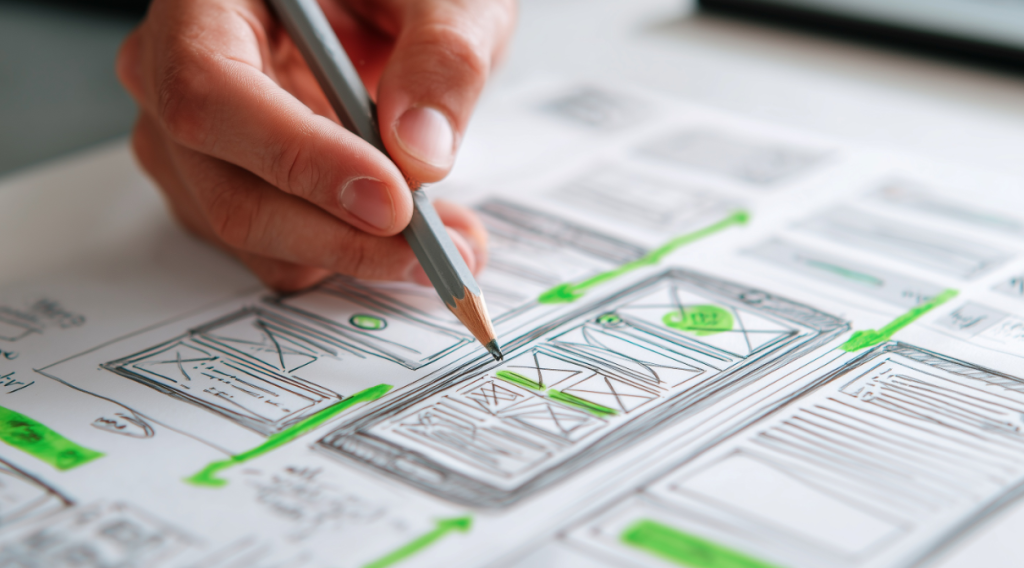
Future ready UX design is the practice of creating digital experiences built on adaptable foundations. It’s architecture that anticipates change without over-engineering for specific scenarios. It’s interfaces that maintain clarity as complexity grows. It’s systems that learn from users rather than forcing users to learn systems.
Think of it like designing a home. A trendy interior might look impressive today but feel dated within months. A well-designed structure, however, accommodates changing furniture, growing families, and evolving lifestyles while remaining fundamentally comfortable and functional. The walls support expansion. The flow makes sense regardless of how rooms are used. The foundation is solid enough to support additional stories.
Digital products work the same way. Future ready UX means your information architecture can absorb new features without becoming labyrinthine. Your design system allows for visual evolution without sacrificing consistency. Your interaction patterns remain intuitive even as underlying technologies shift from web to mobile to voice to whatever comes next.
This approach requires a mindset shift. Traditional design often treats products as finished statements, perfected, launched, and maintained. Future ready design treats products as ongoing conversations, initiated thoughtfully, but designed to evolve through user feedback, technological advancement, and business growth.
The brands mastering this in 2026 share common characteristics. They prioritize modularity, building with interchangeable components rather than monolithic structures. They embrace progressive disclosure, revealing complexity gradually rather than overwhelming users immediately. They invest in design systems, not as constraints, but as languages that enable faster, more consistent evolution.
Most importantly, they recognize that future ready UX isn’t solely a design team responsibility. It’s a cross-functional commitment involving product strategy, engineering architecture, content strategy, and business operations. When these disciplines align around user-centered adaptability, magic happens. Products feel cohesive even as they scale. Teams move faster without breaking experiences. Users remain engaged because the product grows with them rather than away from them.
Why Future Ready UX Design Has Become Critical for Brand Scaling
If you’re questioning whether this investment is worth prioritizing, consider the landscape we’re operating in. Three fundamental shifts have made future ready UX design not just beneficial, but essential for any brand serious about growth.
The Complexity Trap: When Growth Creates Chaos
Every scaling brand faces a paradox. Success brings resources, which enable expansion, which introduces complexity. More features to serve diverse user segments. More integrations to connect with partner ecosystems. More platforms to reach users wherever they are.
Without intentional UX architecture, this complexity becomes the enemy of clarity. We’ve seen it repeatedly: the travel platform that added booking, reviews, community features, and AI recommendations until navigation became a cognitive burden. The fintech app that expanded from simple payments to investments, insurance, and crypto until users couldn’t find basic functions. The enterprise dashboard that integrated so many data sources that insights disappeared in visual noise.
Future ready UX design provides the structural integrity to handle this complexity. It creates information hierarchies that scale logically. It establishes navigation patterns that accommodate growth without requiring users to relearn interfaces. It ensures that adding capabilities enhances rather than obscures core value.
This matters because complexity-related friction has immediate business consequences. Every additional click required to complete a task, every moment of confusion about where to find functionality, every inconsistent interaction pattern increases cognitive load. And cognitive load is the silent killer of engagement. Users don’t complain about complexity, they simply leave, often without understanding why they feel frustrated.
The Expectation Revolution: Users Compare You to Everything
Perhaps the most underappreciated shift in modern UX is the expansion of competitive context. Your users aren’t comparing your experience just to direct competitors. They’re comparing it to the best digital experiences they’ve encountered anywhere.
That food delivery app with one-tap reordering? It shapes expectations for your B2B procurement platform. That social media feed with infinite, personalized content? It influences how users expect your educational dashboard to surface relevant information. That voice assistant that anticipates needs? It raises the bar for how intuitive your healthcare app should feel.
Future ready UX design acknowledges that expectations evolve continuously. It builds in the intelligence to personalize experiences based on user behavior. It prioritizes performance because speed has become a baseline expectation. It creates feedback loops that help the product improve through usage, ensuring it feels increasingly relevant over time rather than increasingly dated.
Brands that ignore this reality find themselves in a dangerous position. Their product might objectively improve, more features, better pricing, broader availability, but the experience feels stagnant compared to evolving alternatives. Like a beloved restaurant that never updates its decor, loyal users begin drifting away not because the offering degraded, but because their relationship with it failed to evolve.
The Adoption Imperative: Great Products Fail Without Great Experiences
Here’s a truth that stings: product excellence and user adoption are not the same thing. We’ve encountered brilliant innovations, technically sophisticated, genuinely useful, potentially transformative, that struggled because getting started felt like work.
The enterprise analytics platform with powerful insights buried beneath confusing configuration. The wellness app with evidence-based protocols obscured by cluttered onboarding. The collaboration tool with robust features fragmented across inconsistent interfaces. In each case, the gap between capability and accessibility limited impact.
Future ready UX design bridges this gap intentionally. It recognizes that adoption happens in stages, designing for the curious browser, the committed beginner, and the power user simultaneously. It creates onboarding that demonstrates value progressively rather than demanding upfront investment. It surfaces intelligent defaults that make sophisticated features accessible without requiring expertise.
This adoption focus has direct business implications. Poor UX doesn’t just reduce usage, it increases costs. Confused users require more support. Frustrated customers churn faster. Teams spend resources explaining rather than enhancing. Future ready design inverts this equation, creating experiences that reduce support burden, improve retention, and accelerate word-of-mouth growth because users genuinely enjoy engaging with the product.
The Leo9 Studio Approach: Designing for What Comes Next
Our work at Leo9 Studio has convinced us that future ready UX design requires specific methodologies. These aren’t abstract principles but practical approaches we’ve refined across dozens of brand transformations.
Architecting for Evolution
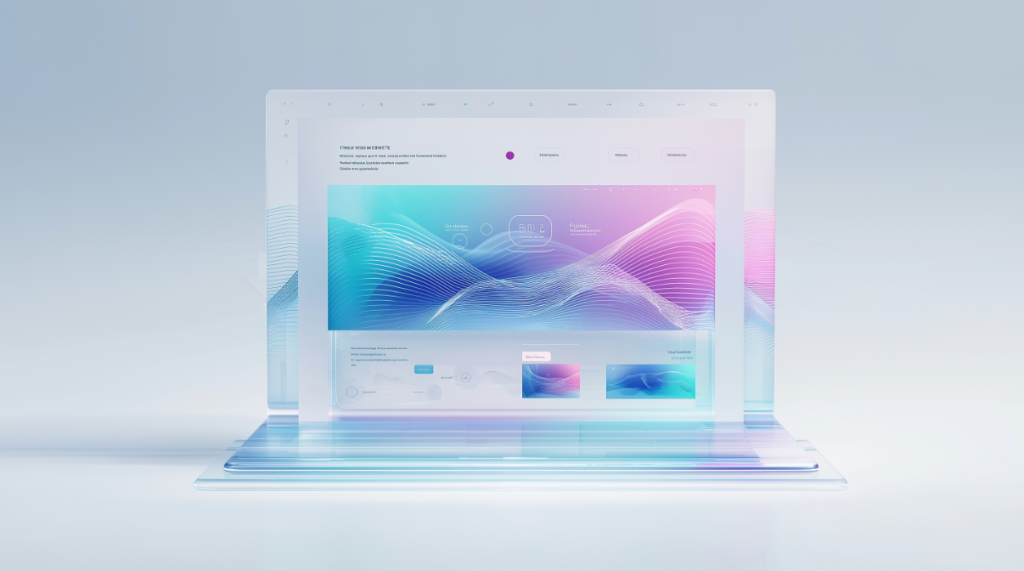
We begin every engagement by thinking about structure before surface. What information relationships will persist as features expand? What navigation patterns can accommodate growth without requiring redesign? What content hierarchies will serve both today’s focused offering and tomorrow’s broader platform?
This architectural thinking manifests in sitemaps that anticipate expansion zones, user flows that handle increasing decision complexity, and interface frameworks that maintain spatial consistency even as capabilities multiply. The goal is creating experiences that feel inevitable, where additions feel like natural evolution rather than awkward appendages.
Systems That Scale
Design systems have become industry standard, but future ready systems differ in crucial ways. They prioritize flexibility over prescription, providing patterns that solve problems rather than templates that restrict solutions. They establish principles that guide decisions rather than rules that prevent adaptation.
We build systems with growth in mind: component libraries that accommodate new interaction patterns, token-based design languages that enable visual evolution without reconstruction, and documentation that helps teams extend the system confidently. The result is consistency without rigidity, brands that feel cohesive across touchpoints while remaining capable of surprise and innovation.
Intelligence Through Integration
Modern UX design must leverage data thoughtfully. We integrate analytics, user research, and behavioral insights into design processes, creating feedback loops that inform evolution. But we maintain human judgment as the final arbiter, using data to understand what happens, but design expertise to determine what should happen.
This balanced approach prevents the sterility of purely data-driven design while avoiding the subjectivity of purely intuitive approaches. It ensures products evolve based on actual user needs rather than assumed preferences or isolated metrics.
Engineering Alignment
Perhaps our most distinctive practice is embedding design thinking into technical architecture from inception. Future ready UX requires engineering foundations that support experience goals, APIs designed for responsive interfaces, databases structured for personalized content delivery, infrastructure that enables real-time interactions.
By aligning design and development from day one, we prevent the friction that often emerges when beautiful experiences meet technical constraints. The result is products that feel as good under the hood as they do on the surface, capable of scaling technically and experientially in parallel.
Transformations That Illustrate the Power of Future Ready UX
Theory matters, but real impact resonates more deeply. Consider these transformations from our portfolio, each illustrating different facets of future ready design.
TravelXP: From Static Brochure to Living Platform
TravelXP approached us with a familiar challenge: a website that had grown organically until it became a digital filing cabinet. Travel packages, blog content, user reviews, and booking tools coexisted without cohesion. Users bounced between sections without clear pathways. The brand’s passion for immersive travel was lost in functional fragmentation.
Our redesign began with narrative architecture. We restructured the experience around travel stories, curated journeys that guided users through possibilities before presenting logistics. Navigation became intuitive through destination-based wayfinding rather than feature-based menus. Visual design evolved from generic travel imagery to immersive photography that conveyed emotional experience.
The technical implementation matched this conceptual clarity. We built modular content systems allowing TravelXP to launch new destinations without redesigning pages. We created scalable booking flows that handled increasing complexity without confusing users. We established performance benchmarks ensuring immersive content loaded instantly even on variable connections.
Results extended beyond metrics, though those improved significantly. More importantly, TravelXP gained a platform that grew organically with their business, each new feature enhancing rather than complicating the core experience.
KPIT: Enterprise Complexity, Human Clarity
Enterprise technology presents unique UX challenges. Products are powerful but abstract, valuable but complex, transformative but intimidating. KPIT, a global technology solutions provider, struggled with this paradox. Their capabilities were substantial, but their digital presence communicated through jargon-heavy abstraction that failed to connect with decision-makers.
Our approach centered on translation, converting technical complexity into business value. We restructured information architecture around customer outcomes rather than service categories. We created progressive disclosure systems that revealed technical depth only to interested users. We developed visual systems that felt contemporary and accessible while maintaining enterprise credibility.
The transformation wasn’t merely cosmetic. By making KPIT’s value accessible, we enabled their sales teams, improved their recruitment efforts, and established digital foundations that supported their global expansion. The experience became a competitive advantage, differentiating them in a sector where most competitors remained trapped in technical self-reference.
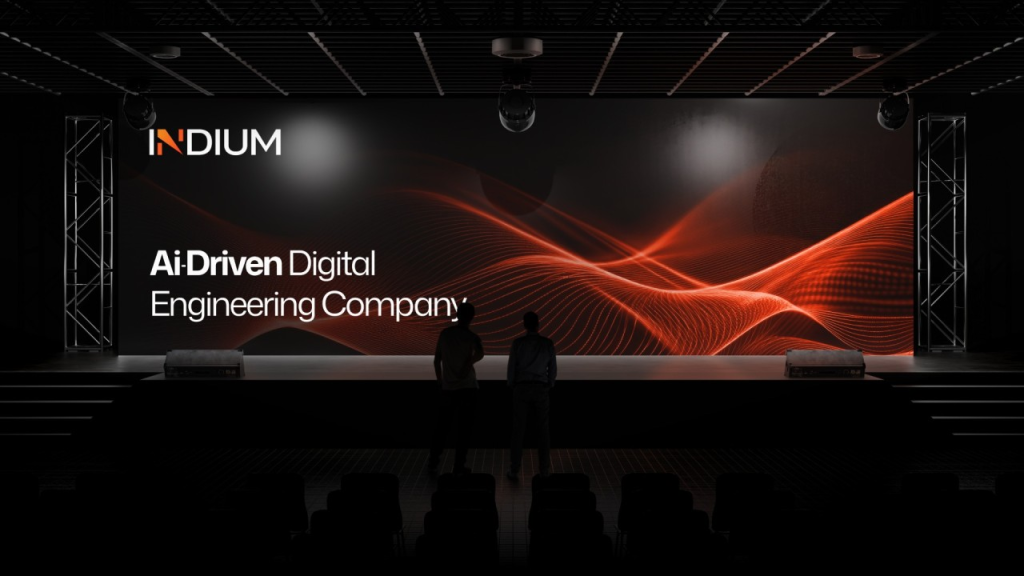
Indium: Dynamic Identity for a Changing World
Indium’s challenge was identity coherence across evolution. As a technology and branding transformation partner, they needed a digital presence that demonstrated their capabilities while remaining flexible enough to showcase diverse client work and evolving service offerings.
We developed what we term a “living design system”, visual frameworks that maintained brand coherence while accommodating radical content variation. The website became a demonstration of their philosophy: structured enough to feel professional, flexible enough to feel creative, scalable enough to grow with their portfolio.
This approach required sophisticated technical implementation, content management that handled diverse media types, performance optimization for media-rich experiences, and navigation that guided users through creative exploration without losing them in infinite possibilities. The result was a brand presence that felt current years after launch because it was designed to evolve.
NIF Global: Relevance Through Reimagination
Educational institutions face generational relevance challenges. NIF Global, with decades of established presence, needed to connect with students who had grown up with fundamentally different digital expectations.
Our rebranding went beyond visual refresh to systemic reimagination. We developed identity systems that spoke contemporary design language without alienating established stakeholders. We created digital experiences that felt native to how younger users discover, evaluate, and engage with educational opportunities. We built content strategies that balanced institutional credibility with personal relevance.
The impact was perceptual as much as behavioral. NIF Global didn’t just attract more inquiries; it attracted different inquiries, students who saw the institution as aligned with their future rather than their parents’ past. The future ready design enabled strategic repositioning that would have been impossible with incremental updates.
Core Elements of Future Ready UX Design
These transformations reveal consistent principles that any brand can apply. Consider these elements as your framework for evaluation and evolution.
Scalable Design Systems
Consistency enables recognition, but rigidity prevents growth. Future ready design systems establish core principles, color logic, typography scales, spacing rhythms, interaction patterns, that create coherence while permitting variation. They include guidelines for extending the system, ensuring new components feel native rather than foreign.
Modular Architecture
Interfaces built from interchangeable modules adapt more gracefully than monolithic structures. Modular UX allows features to be added, removed, or reconfigured without systemic disruption. Users encounter familiar patterns even as capabilities evolve, reducing learning curves and maintaining comfort.
Intelligent Personalization
Generic experiences feel increasingly impersonal. Future ready UX incorporates personalization that respects user privacy while delivering relevance, adaptive interfaces that surface frequently used features, content recommendations based on behavior patterns, and progressive disclosure that reveals complexity proportional to user sophistication.
Cross-Platform Coherence
Users encounter brands across devices, contexts, and modalities. Future ready design ensures these encounters feel connected, consistent core experiences adapted appropriately for each platform rather than fragmented platform-specific versions. The goal is recognition and continuity, not identical replication.
Performance as Experience
Speed is no longer a technical metric but a user experience fundamental. Future ready design prioritizes performance at every level, optimized assets, efficient code, strategic caching, and graceful degradation. Every millisecond of delay erodes engagement; every instant of responsiveness builds trust.
Common Barriers to Future Ready UX
Recognizing these patterns, you might wonder why more brands don’t adopt them. In our experience, several recurring obstacles prevent organizations from implementing future ready UX.
Short-Term Thinking
Quarterly pressure drives immediate fixes over foundational improvements. Brands add features to address specific requests rather than evolving systems to address categories of need. The result is rapid accumulation of technical and experiential debt that eventually requires costly reconstruction.
Feature Obsession
The belief that more capabilities equal better products leads to interface overload. Future ready UX requires discipline, saying no to features that don’t align with core value, even when they’re technically feasible or competitively present.
Design Isolation
When design operates as a cosmetic layer applied after strategic and technical decisions, future readiness becomes impossible. The structural decisions that enable experiential evolution must be made collaboratively across disciplines.
Perfection Paralysis
Some organizations delay launches seeking ideal solutions, missing the opportunity for real-world learning. Future ready UX embraces iteration, launching with solid foundations, learning from usage, and evolving based on evidence rather than speculation.
Your Actionable Framework for Future Ready Transformation
If these principles resonate, here’s how to begin implementing them in your organization.
- Audit Current Experience
Start with honest assessment. Map user journeys through your current experience, identifying friction points, confusion moments, and abandonment triggers. Analyze support tickets and user feedback for patterns indicating structural rather than surface issues. Evaluate technical architecture for scalability constraints.
- Simplify Before Scaling
Resist the urge to add before subtracting. Remove features that don’t serve core value. Consolidate redundant pathways. Clarify information hierarchies. The best foundation for growth is a clean, focused current state.
- Build Systems, Not Screens
Shift from designing pages to designing systems. Establish component libraries, pattern repositories, and principle documentation. Create the infrastructure for consistent evolution before creating the next specific experience.
- Align Experience with Strategy
Ensure UX decisions support business objectives. If growth targets emphasize retention, prioritize onboarding and engagement flows. If expansion targets new segments, ensure information architecture accommodates diverse user mental models. Design should directly enable strategic goals.
- Commit to Continuous Evolution
Future ready UX is never finished. Establish rhythms for evaluation and iteration, regular user research, performance monitoring, and systematic updates. Create organizational cultures that treat products as ongoing investments rather than completed projects.
The Trajectory Ahead: UX in 2026 and Beyond
Looking forward, several developments will shape future ready UX requirements.
AI Integration will move from novelty to expectation, intelligent assistants, predictive interfaces, and automated personalization becoming standard rather than exceptional. Future ready design must accommodate AI capabilities without making human agency feel secondary.
Immersive Technologies will expand beyond gaming into mainstream applications. Spatial computing, augmented reality, and ambient interfaces will require UX approaches that transcend traditional screen-based thinking while maintaining usability principles.
Ethical Considerations will increasingly influence design decisions. Privacy-preserving personalization, inclusive accessibility, and sustainable digital practices will become competitive differentiators and regulatory requirements.
Biometric and Emotional Interfaces will enable new interaction modalities. Future ready UX must integrate these capabilities thoughtfully, enhancing human experience rather than creating surveillance or manipulation.
FAQ’s related to Future Ready UX Design
It is a design approach that ensures digital products remain scalable, adaptable, and relevant as technology and user expectations evolve.
Because it directly impacts user retention, engagement, and overall product adoption.
When growth slows, user complaints increase, or the product struggles to scale.
Yes. Better UX improves conversions, reduces churn, and increases customer lifetime value.
Conclusion: Building What Lasts
The brands that will define the next decade aren’t necessarily those with the most resources or the earliest starts. They’re the ones building digital experiences designed for evolution, experiences that feel intuitive today, adapt intelligently tomorrow, and maintain human-centered clarity regardless of technological complexity.
Future ready UX design is ultimately an act of respect for your users and your own ambitions. It acknowledges that your product will grow, your market will shift, and your technology will evolve. Rather than fighting this reality through rigid designs requiring constant reconstruction, it embraces change through adaptive foundations that improve through use.
If you’re sensing that your current experience is constraining your growth, trust that intuition. The frustration you feel navigating your own product, the feedback you receive from confused users, the technical debt accumulating with each new feature, these are signals that foundational change is needed.
The transformation isn’t instantaneous, but it is achievable. It requires strategic clarity, cross-functional collaboration, and disciplined execution. Most importantly, it requires the courage to invest in long-term adaptability over short-term fixes.
At Leo9 Studio, we’ve guided brands through this transformation repeatedly. We’ve seen the relief when complexity becomes clarity, the excitement when users discover unexpected value, and the confidence when teams realize their product can grow without breaking. These moments confirm our conviction that future ready UX design isn’t just good practice, it’s the foundation of sustainable success.
See how we’ve transformed brands.
Your brand has potential that your current experience might not be revealing. Your users are waiting for interactions that respect their time and intelligence. Your team deserves systems that enable creativity rather than constraining it. The investment in future ready UX design unlocks all of this.
The future belongs to brands that evolve. Let’s build yours to be among them.
Ready to explore what future ready UX design could mean for your brand? Connect with Leo9 Studio for a conversation about your specific challenges and opportunities.